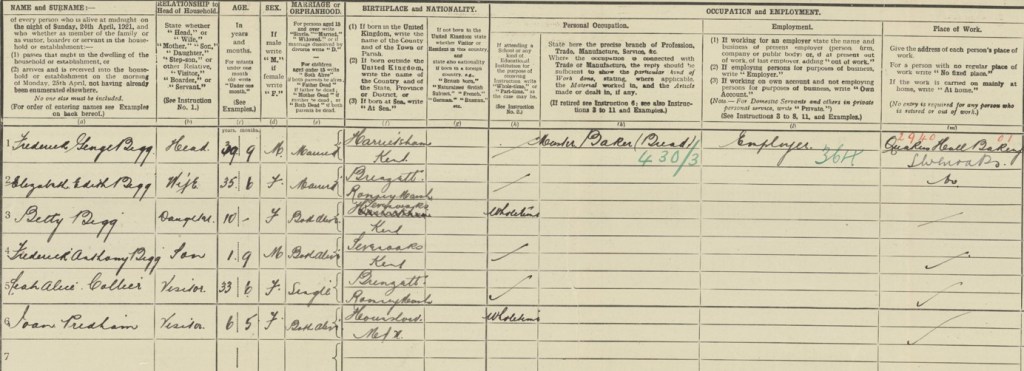
If you’ve followed Sevenoaks History Hub for a while, you may have noticed that quite a few of the old black-and-white photographs and postcards I share have something in common.
Whether it’s Greatness Lane, the High Street, St John’s Hill, Knole or one of Sevenoaks’ quieter corners, the same name often appears on the front or back of the card:
E. Fielder, Sevenoaks.
Ernest Fielder was a professional photographer based at 121 St John’s Hill. Before the First World War he was already employed as an assistant photographer. He enlisted in the Royal West Kent Regiment in November 1916, was mobilised the following year and served in France from 1918, where his service record shows he was wounded in action.
The studio took photographs of other local men serving, including this one of Thomas ‘Tom’ Porter who served on HMS Arethusa. The Fielder mark can be seen in the bottom right of the image.
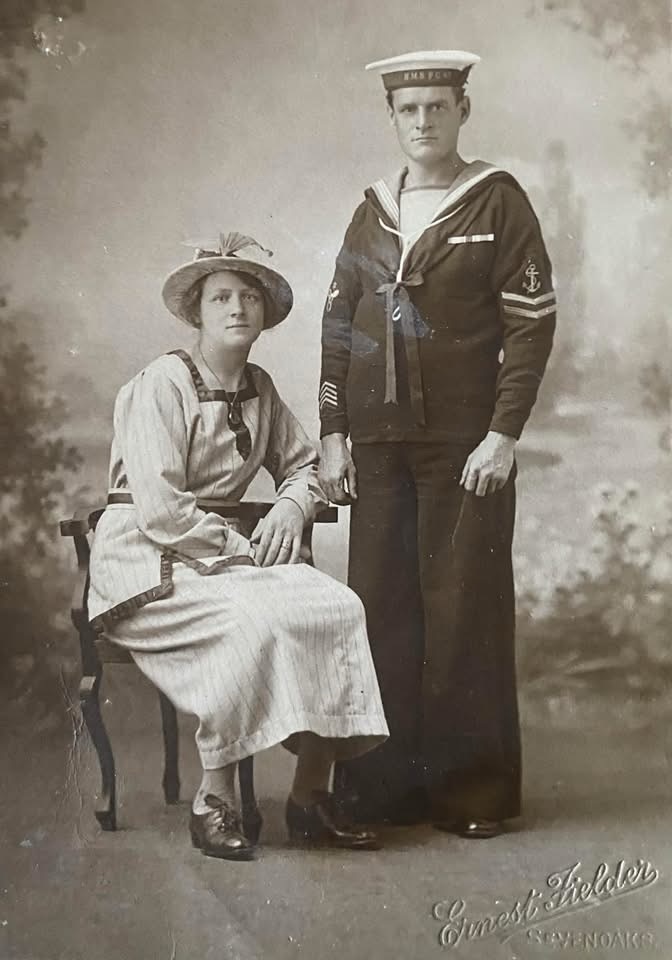
After the war he returned to Sevenoaks and built the photographic business for which he is now remembered.
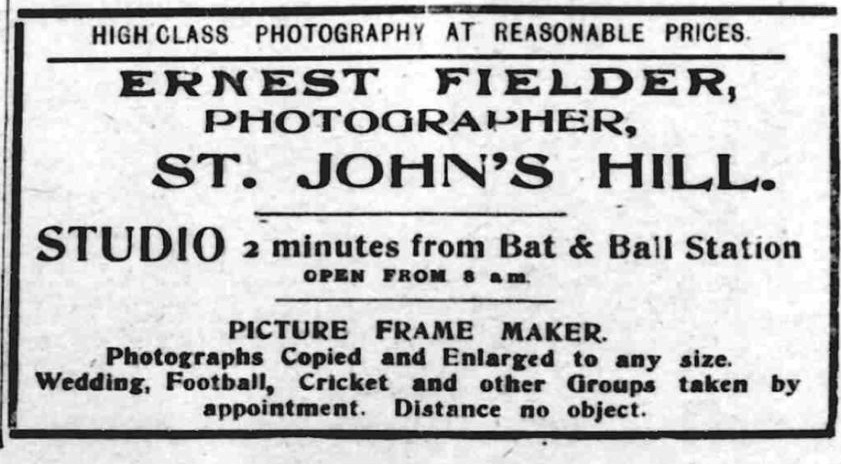
By June 1920 he was advertising his services in the Sevenoaks Chronicle. As well as portrait photography, he offered wedding photographs, football and cricket team pictures, enlargements, copying old photographs and picture framing. His studio was only a couple of minutes from Bat & Ball station and his advertisement ended with the confident line: “Distance no object.”
The 1921 Census records Ernest as a self-employed photographer, while the 1939 Register describes his occupation as “Photographer – Portrait, Commercial and Retail.” Photography wasn’t simply something he enjoyed doing; it was his livelihood for decades.
Many of the postcards he produced carry the simple imprint “By E. Fielder, Sevenoaks, Kent”, leaving little doubt that he was the photographer as well as the publisher. Looking through them, it’s clear he wasn’t interested only in landmark buildings like Knole, or special occasions. He photographed the places that made up everyday Sevenoaks – the High Street, Greatness, St John’s Hill, schools, churches and countless ordinary streets that people walked every day without giving them much thought.
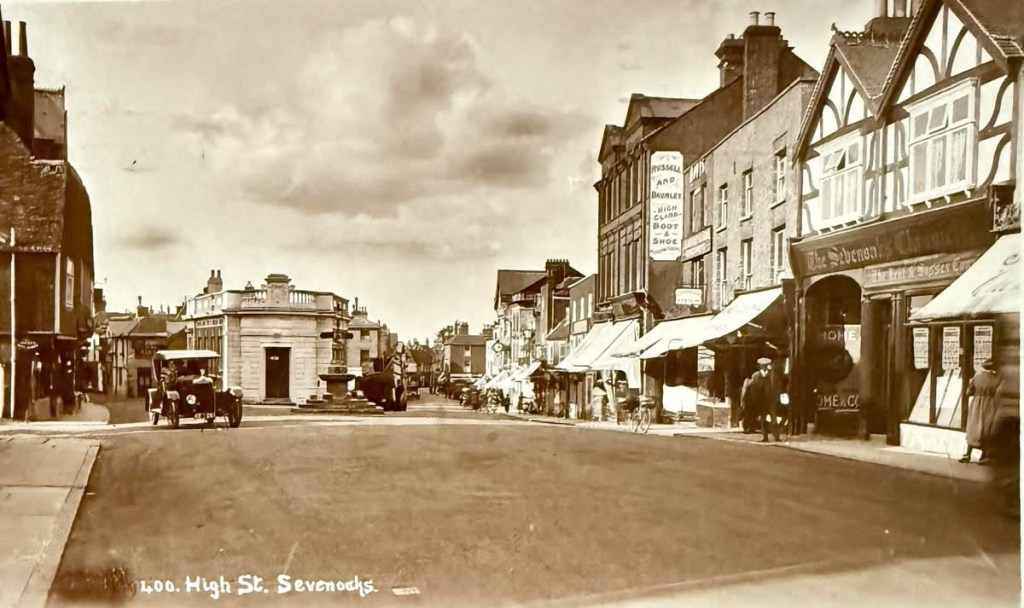
It’s those ordinary scenes that have become the most valuable. A hundred years later they show us buildings that have disappeared, roads before they were widened, open spaces now built over and a town that was changing but still recognisably Sevenoaks.
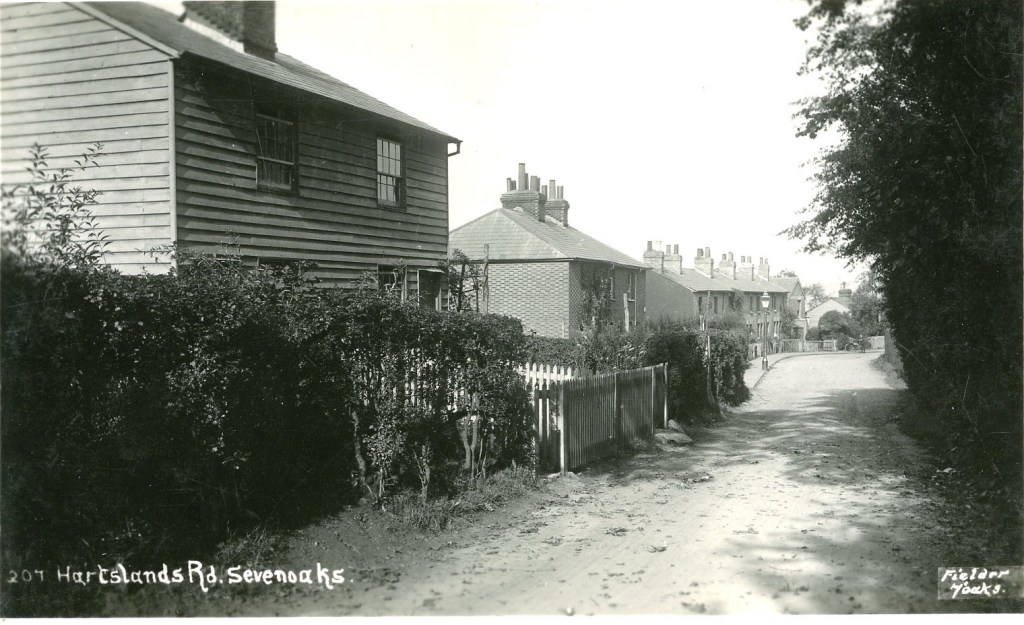
One thing that has particularly struck me while researching Ernest is the number of different views that survive. Many are individually numbered, suggesting he built up a substantial catalogue over many years. I suspect (hope!) that there are still plenty waiting to be rediscovered in family albums, old postcard collections and forgotten boxes in lofts.
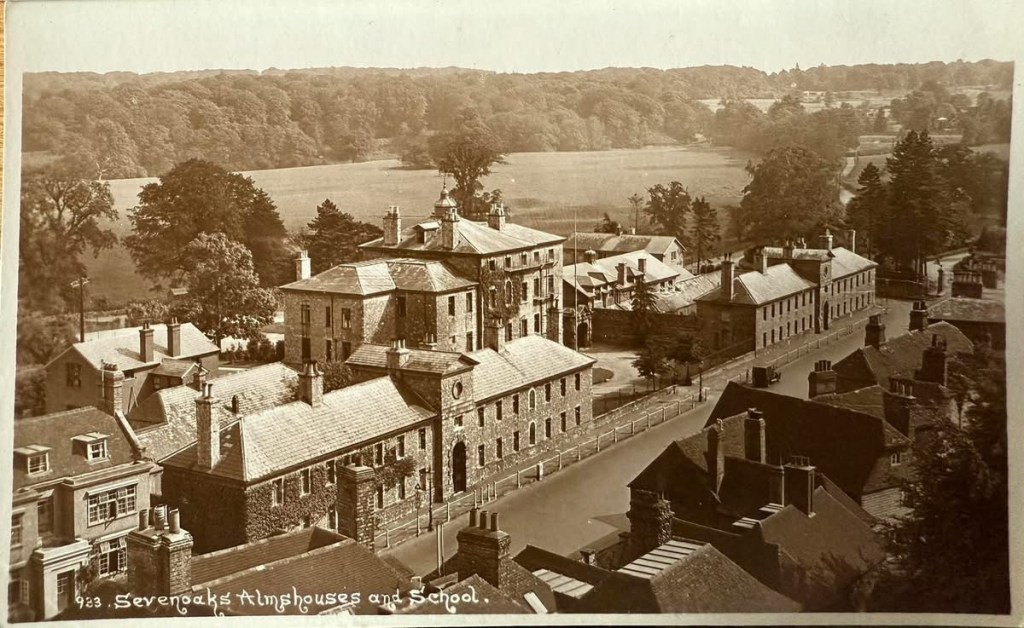
Ernest Fielder wasn’t a household name beyond his own town but his photographs have quietly become part of Sevenoaks’ visual history. Without them, our understanding of how the town looked during the first half of the twentieth century would be much poorer.
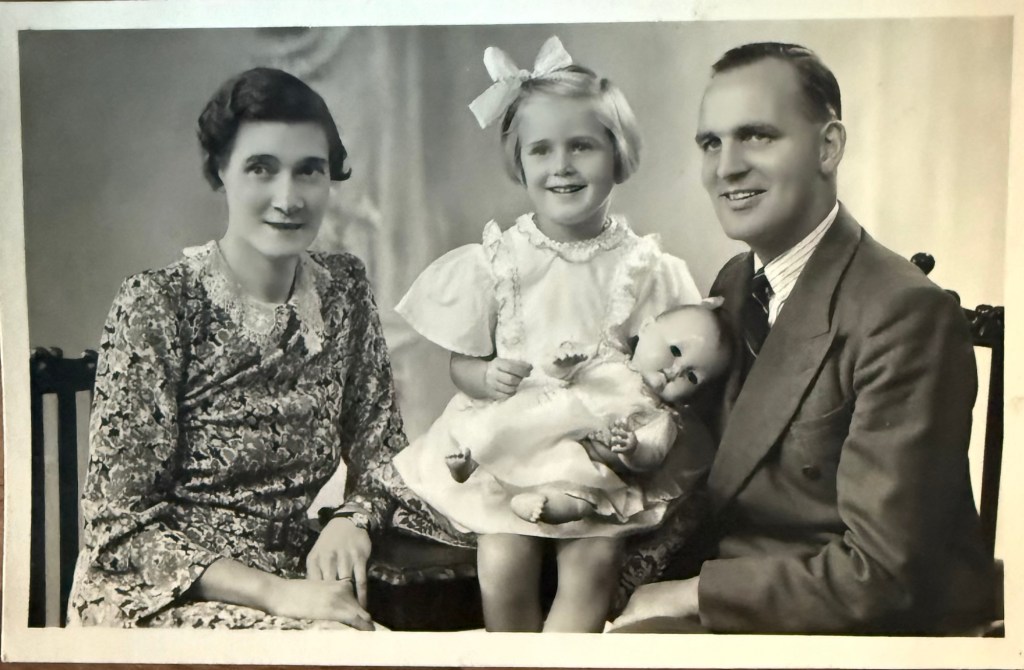
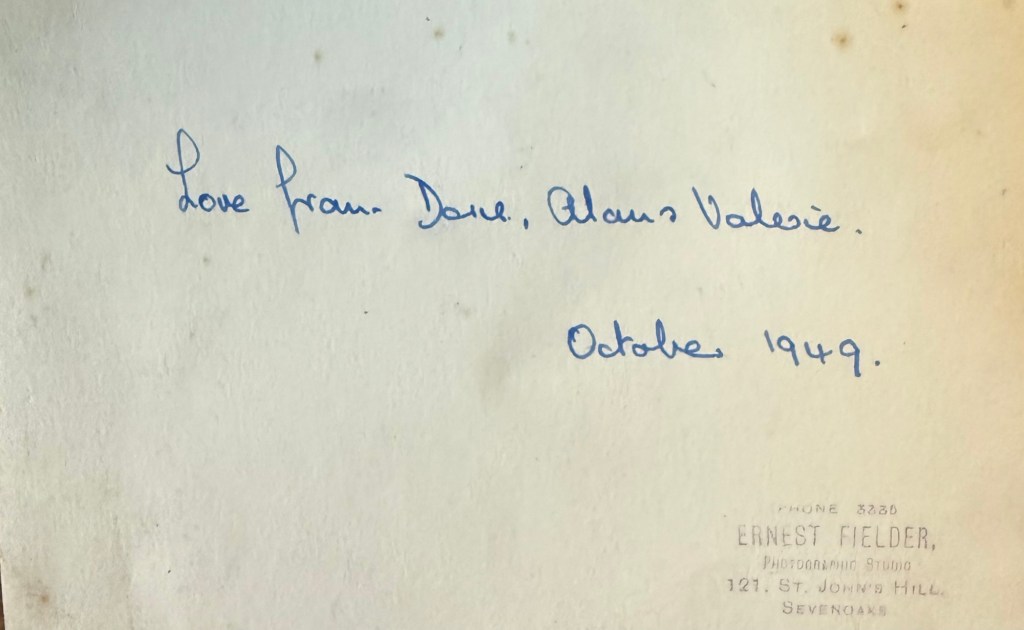
Ernest died in 1969 aged seventy and the Sevenoaks Chronicle printed an obituary:
Mr. Fielder was born in Sevenoaks and was a pupil at Bayham Road School. He and his two brothers joined in a photographic business which still thrives at the foot of St. John’s Hill.
He was apprenticed to the trade and over the years he and his brother became widely known for the excellence of their work and especially their printing for amateurs.
Mr. Fielder was a devout churchman. He was active at the Methodist Church near his home for many years and became church secretary and superintendent of the Sunday School. But in later years he returned to his original church to become a member of the Baptist congregation.
He served throughout the 1914–18 War and was slightly gassed. Although this affected him in later life at times he was noted for his quiet good humour.
Mr. Fielder attended the funeral of an old acquaintance on Friday and it was while in the church that he collapsed and died. He leaves a wife and son.
Please do let me know if you have any photos or postcards by Ernest and any stories or memories about his shop, especially a photo of Ernest himself. I would love to build up a more complete archive of his work.
If you’d like to support Sevenoaks History Hub and help keep the research going, you can buy me a coffee ☕
Sources
This article is based on the 1921 Census, the 1939 Register, First World War service records, contemporary advertisements in the Sevenoaks Chronicle, and surviving Ernest Fielder postcards and photographs from my private collection.
The images reproduced here are out of copyright. If you reuse them, I’d appreciate a credit to Ernest Fielder and Sevenoaks History Hub. The text of this article is © Sevenoaks History Hub. Please don’t reproduce it in full without permission. Short quotations with a link back to the original article are always welcome